

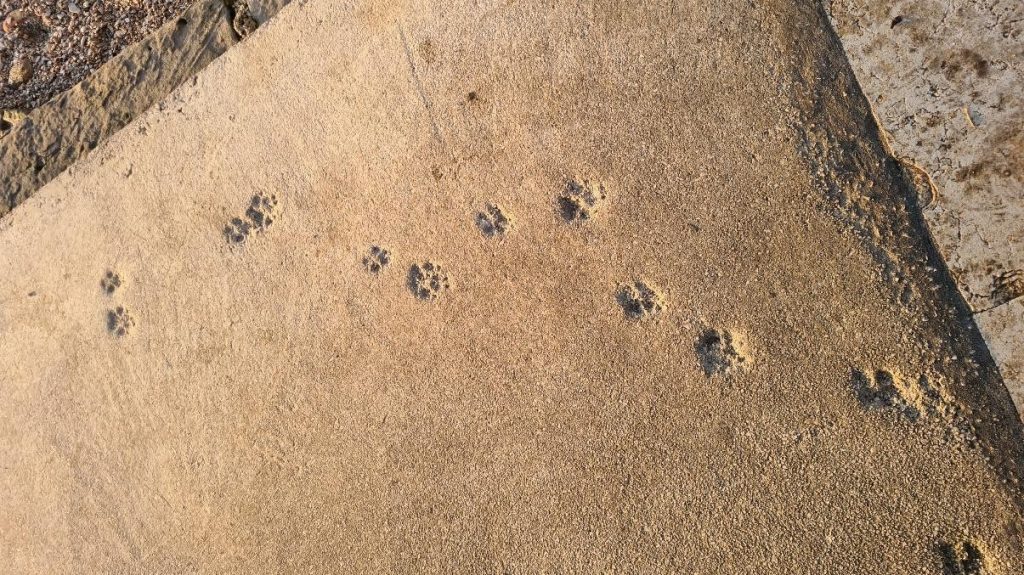
From trails to graphs
Students record their movements and prepare graphical representations of their motion
Key Focus
Visualization,
Interpreting graphs
Subject(s)
Science, Physics, Mathematics
Suitable for age(s)
12-18 years
Introduction
Describing motion with graphs is an effective but abstract process. Many students struggle to accurately draw graphical representations of motion, and it is even more challenging for them to extract data about the motion from a graph. The ability to quickly interpret or communicate data in graphical form is essential for general literacy. Graphs are used extensively in science, physics, and mathematics classes; however, the transfer of knowledge about graphs across these subjects is often weak. This task helps students bridge the gap between physical experience and the abstract mathematical description of motion. It develops their ability to visualise, record, describe, and ultimately graph different forms of motion. This task proposes a hands-on approach: students record trails of their own simple movements, describe both the motion and the resulting trails in words, and then transform these trails into simple graphs. To complete the learning cycle, the task is inverted: motion represented by simple graphs is described in words.
Task Description
Students begin by observing and discussing familiar trails (e.g. footprints, ski trails, plane trails), then create their own motion trails using simple equipment. Finally, they transform these trails into graphs and practice reading graphs to describe motion. The task offers students the opportunity to engage deeply with a chosen phenomenon and collaborate to refine their questioning and inquiry skills. Activities presented in this task enable students to visualise the trail left by their moving body (specifically their hand) and experience how different modes of motion influence the trail. A time component is then added to transform the trail into a simple graph. Students should have some preliminary knowledge about:.
– Coordinate systems
– The presentation of independent (time) and dependent (position) variables in graphs
– The concepts of speed and direction
– Spatial orientation (left, right, from, to) and uniform motion.
Materials required
- Soft pencils, markers, or similar — important that a small force enables drawing (use at least two different colours)
- Sheets of paper (A4 or A3; continuous roll paper is even better)
- Flat surface (large tables for two or more students) for recording motion trails.