

Heat Pads and Supercooled Water
Students investigate undercooling using heat pads and supercooled water
Key Focus
Designing investigations
Conducting investigations
Subject(s)
Physics, Chemistry
Suitable for age(s)
12-18 years
Introduction
This task examines the phenomenon of undercooling, a state in which a liquid remains in its liquid phase even below its normal freezing point. By exploring heat pads and supercooled water, students observe and analyse first-order phase transitions in an engaging and interdisciplinary context.
Heat pads are filled with material that is crystalline at room temperature and is liquid at the regular boiling temperature of water, with the transition temperature slightly above 50˚C. However, the material is easily supercooled, and once it is heated above its melting point, it remains liquid at room temperature or even lower temperatures. This makes it a “carry-around heater” that doesn’t require fire or electricity. Students inquire about the phenomenon. The task is extended to undercooling the water below its melting point, to expand the inquiry to water, and to compare and identify similar characteristics between both experiments.
The aim of the task is for students to get familiar with a phenomenon that is always associated with first-order transitions between solids and liquids. The goal is not just to demonstrate a physical effect, but to offer a real-world, inquiry-driven approach to thermodynamic concepts such as latent heat, specific heat, and phase changes. The task is suitable for the upper secondary level, when thermodynamics, including states of matter and phase transitions, is taught. In lower secondary, it could be used to enhance experimental skills, such as controlling variables, measuring temperature, and similar activities. Additionally, in lower secondary school, the activity is introduced when states of matter and phase transitions are discussed.
Task Description
The task explores two cases of undercooling:
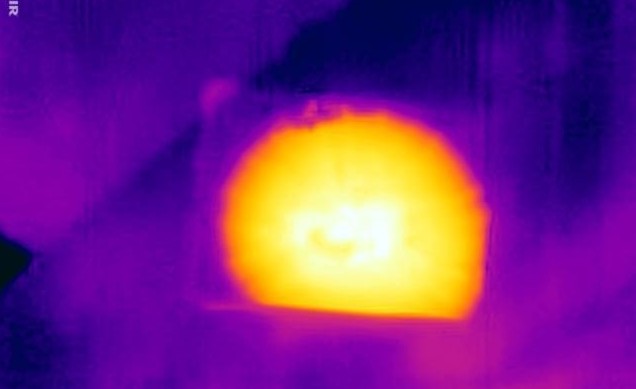
- A commercial heat pad, usually used for heating sore parts of the body or cold hands in winter. which contains a supercooled liquid that crystallizes upon mechanical stimulation, releasing heat. To activate the heat pads, immerse them in boiling water until the contents become gel-like. The contents retain their appearance after cooling, but with a sharp blow on the pad or by bending and releasing the stick or button inside, the contents suddenly crystallise and heat up considerably.
- Distilled water cooled below 0°C, which remains liquid until disturbed and then freezes suddenly with an accompanying temperature rise. A situation occurs when if one leaves a bottle of water outside on a cold winter night, it sometimes does not freeze. The water in the bottle remains clear. However, when you pick up or move the bottle, the water suddenly becomes opaque, filled with small flakes floating throughout. Upon inspecting these flakes, it turns out they are formed of small conglomerates of ice full of water.
Both cases represent first-order phase transitions, illustrating the latent heat effect in a vivid and measurable way. Students work in groups and follow an inquiry-based learning (IBL) cycle. experimentally established conditions for observation of both phenomena are the focus of this task.
Students should realise that a very similar phenomenon can usually be interpreted as a single phenomenon with a single explanation of the underlying chemistry or physics. In this case, both materials are supercooled, and when they start to crystallise, they both warm up. The difference lies only in the temperature at which the phenomenon of sudden crystallisation occurs and ends. Students develop their observation skills, are trained in planning, drawing conclusions and reporting. Additionally, in upper secondary school, the released heat and the heat capacity of the heat pad containing liquid can be measured using a standard procedure. The temperature of the heat pad, in which crystallisation has just finished, is measured, and the pad is placed in a calorimeter with a well-defined volume of water. The temperature of the water is measured before and after. The quantity of heat transmitted to water is measured, and the whole heat released during the process is calculated by extending the temperature difference to the initial temperature of the pad before crystallisation. The task connects teaching and learning in chemistry and physics. Thermodynamics is a common link between the two, but here, the teacher of both subjects can analyse the same phenomenon and incorporate the experience into the teaching of chemistry and physics topics later.
Materials required
Equipment per group
- 1–2 transparent heat pads, pre-activated or in liquid state [Heat pads have to be prepared in advance, that is, “cooked” in boiling water until every remaining crystal disappears, about half an hour or even more, and then cooled down to room temperature. If heat pads are new and the content is in the liquid state, they can be used directly].
- A glass beaker or cup (≥ 200 mL)
- Regular or digital thermometer
- Clean eprouvette (test tube)
- Access to an infrared thermometer (can be shared)
For all groups
- Ice cubes (sufficient for all experiments) [the supply of ice should be big enough to fill all the glasses when needed]
- Salt (large grain preferred)
- Alcohol and cotton wool or alcohol wipes (for cleaning thermometers)
- At least 1 L of distilled water
- Infrared camera (optional but highly recommended)
Optional but Useful:
- Video recording devices (e.g., smartphones) for student documentation
- Visuals from an infrared camera to demonstrate heat evolution during crystallization