


Glassy Music
Students investigate musical sounds and pitch dependence
Key Focus
Brainstorming
Developing hypothesis
Subject(s)
Physics
Suitable for age(s)
12-18 years
Introduction
This task introduces students to inquiry-based learning (IBL) at two sublevels of guided inquiry, focusing on the topic of sound and musical instruments. The lesson bridges science, physics, and music, involving hypothesising, planning, and conducting a practical experimental activity (with a focus on controlling variables) and reporting. Students experience different aspects of playing and calibrating non-standard instruments, such as spoons, bottles, and glasses, to understand the properties of sound, including pitch, frequency, and resonance. Measurements are taken using ICT tools, i.e., apps like Spectroid and Phyphox.
By promoting collaborative work, group discussion, and hands-on exploration, the task can be used in introductory lessons during the first year of school when new classes are formed and students are not yet familiar with one another.
Task Description
The task comprises several phases that progressively introduce students to scientific inquiry in the context of sound:
1. Brainstorming Session (10–15 min): Elicits students’ prior knowledge about sound, its production, and propagation in different media.
2. ICT Tool Installation and Testing (10 min): Students install and evaluate apps (e.g., Spectroid, Phyphox) to record and analyze sound frequencies.
3. Guided Inquiry – Bottles (25 min): Students investigate how the height of the air column in a bottle affects sound frequency.
4. Guided Inquiry – Musical Glasses (45 min): Students explore how various parameters (e.g., water level, glass shape) influence sound frequency.
5. Closing by the Teacher (5 min): Teacher wraps up the session and connects it to future learning topics. Each phase encourages hypothesis formulation, planning, experimentation, data collection and visualization, and scientific communication.
Materials required
- Spoons (preferably metal)
- Empty glass bottles (identical or varied for comparison)
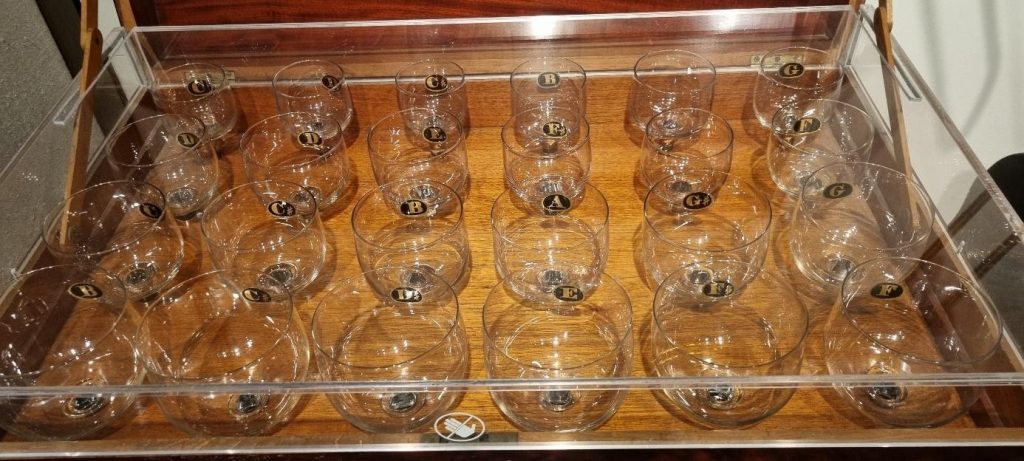
- Wine glasses (one per group)
- Water containers
- Rulers or measuring cylinders
- Smartphones with installed apps:
- Spectroid (for spectrum analysis)
- Phyphox (for sound frequency and waveform analysis)
- Paper towels or cloths (for drying glasses)
- Worksheets for data collection and graphing
- Projector or whiteboard (for student presentations)