

Raising questions
Students observe phenomena to generate investigable questions
Key Focus
Generating questions
Subject(s)
All subjects
Suitable for age(s)
6-18 years
Introduction
Asking questions is a core scientific skill. This task engages learners in exploring how questions can be classified as investigable or non-investigable and teaches them to transform non-investigable questions into investigable ones by identifying variables.
The activity requires no prior knowledge and focuses on the scientific practice of questioning (Council, 2012). It is adaptable across all educational levels and even benefits trained scientists by clarifying effective questioning strategies. Although young children are naturally curious, the ability to ask questions tends to decline with age and schooling, not necessarily due to education itself, but because educational systems often prioritise answering over questioning (Janssen, 2008). Since skilled questioning is at the heart of scientific discovery, this practice should be intentionally cultivated in science and mathematics education.
Task Description
Through hands-on observation of an everyday phenomenon, learners generate questions, categorise them, and learn techniques to convert non-investigable questions into investigable ones. The task consists of a five-step interactive workshop:
1. Observation and questioning
2. Reflection on types of questions
3. Classification of questions
4. Reframing questions using variable scanning
5. Exit reflection
Learners engage deeply with a chosen phenomenon and collaborate to refine their questioning and inquiry skills.
Materials required
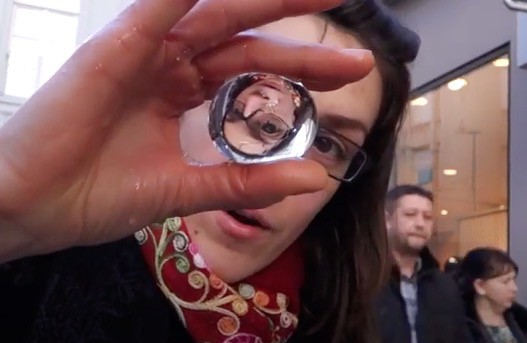
- A selected phenomenon (ice balloon, gel balls, burning flame, dancing raisins, etc.)
- Post-it notes or white paper (minimum 10 per group)
- Observation tools: (magnifying glasses, thermometers, light sources)
- Blackboard or whiteboard
- Writing materials (pens, markers)
- Exit ticket slips