

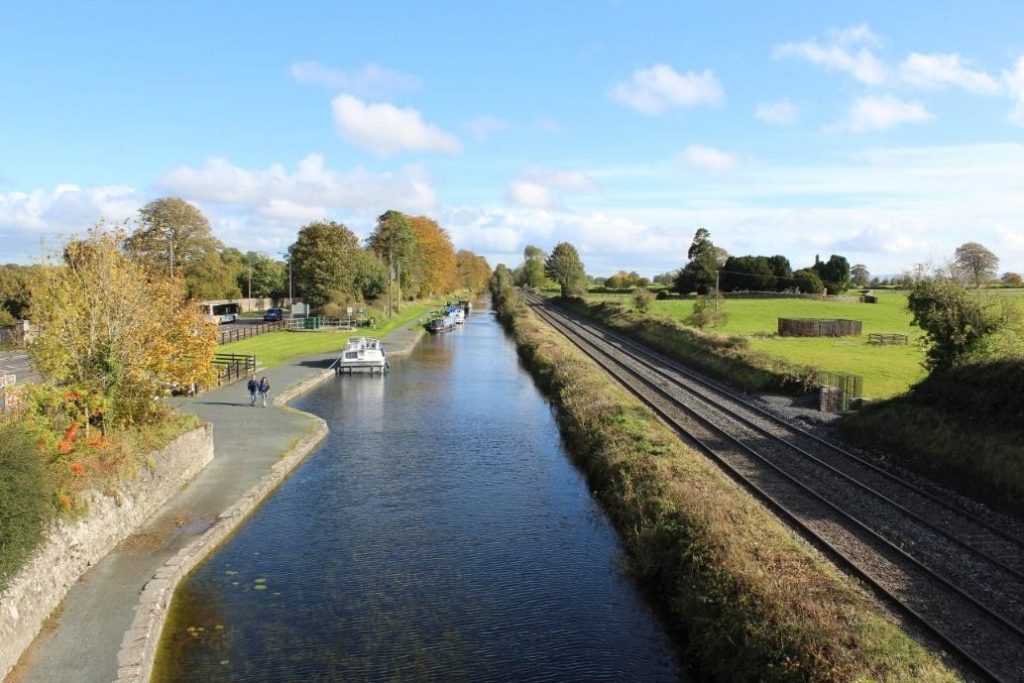
Over the canal
Students use visual thinking strategies to develop their observational skills
Key Focus
Observation,
Scientific reasoning
Subject(s)
Mathematics, Science,
Interdisciplinary studies
Suitable for age(s)
6-17 years
Introduction
This rich task invites students to analyse photographs using Visual Thinking Strategies (VTS) to develop their observational skills, scientific language, and reasoning from evidence. VTS is a method for deepening engagement with visual media through structured inquiry. Students are guided by three key questions: 1. What do you think is going on in this picture? 2.. What do you see that makes you say that? 3. What more can we find?
The task encourages observation, hypothesis testing, and creative science thinking to foster evidence-based reasoning, dialogue, and collaborative meaning-making. It is suitable for learners aged 6–17, and is adaptable to both face-to-face and remote learning environments. Teachers can integrate the task with various curriculum topics in science, mathematics, ethics, and interdisciplinary studies.
Task Description
Students observe and describe an image, form hypotheses, compare them with memory, and take photos based on scientific patterns or seasonal features. The task unfolds in three parts, allowing progression from guided interpretation to student-created content.
In the first part of the task, students working in groups are encouraged to identify patterns and use scientific language in their description of the picture. Subsequently, students formulate hypotheses about the situation in the picture and attempt to find evidence to support or refute their assumptions. Students are given the following prompts – •What do you think is going on? •What do you see that makes you say that? •What more can we find?
In the second part of the task, students are asked to compare situations in two pictures when seeing only one of them and recalling the other, thereby further practising their observational skills. In the third part of the task, students are asked to take a meaningful picture related to a topic of their choice. The main purpose can be outlined by the teacher (e.g., take a picture of geometrical patterns, a physics phenomenon which you can explain later, or anything evidencing the current season, etc.)
Materials required
- High-quality images for projection
- Cameras/smartphones (optional extension activity)
- Worksheets/tables for recording observations
- Digital platforms for sharing images (optional)